
Finding the perfect bomber jacket fit can be tricky! A comprehensive size guide is vital, especially when purchasing online.
Whether seeking regular, large, or tall sizes, understanding measurements ensures optimal comfort and style.
Charts help navigate variations and achieve a flattering silhouette.
Why a Size Guide is Essential
Accurate sizing is paramount when selecting a bomber jacket. Unlike some garments, a bomber’s fit significantly impacts both appearance and comfort. A size guide eliminates guesswork, preventing the disappointment of an ill-fitting purchase.
Without a guide, you risk receiving a jacket too tight in the shoulders or with sleeves that are either too long or short. Considering variations between brands is crucial; sizes aren’t standardized.
A guide ensures you account for layering – will you wear sweaters underneath? It’s challenging to assess fit without trying on, making a chart indispensable for online shoppers. Ultimately, a size guide maximizes satisfaction and minimizes returns, guaranteeing a stylish and well-fitted bomber jacket.
Understanding Different Bomber Jacket Fits
Bomber jackets aren’t one-size-fits-all; understanding fit variations is key. Classic fits offer a balanced silhouette, while slim fits provide a more modern, tailored look. Regular fits allow for comfortable layering, crucial for versatility.
Some bombers feature a relaxed fit, prioritizing comfort and ease of movement. Consider the jacket’s intended use – a flight jacket might prioritize range of motion, while a fashion piece may emphasize style.
Unisex styles often have a straighter cut, while women’s bombers may be more fitted at the waist. Knowing these distinctions helps you choose a bomber that complements your body type and desired aesthetic, ensuring both comfort and a flattering appearance.

Key Measurements for a Perfect Fit
Accurate measurements are crucial! Focus on chest, shoulders, sleeve length, and back length for a precise fit.
These key dimensions ensure a comfortable and stylish bomber jacket experience.
Chest Measurement
Determining your chest measurement is the foundational step in finding the right bomber jacket size. To achieve accuracy, use a flexible measuring tape and position it directly under your armpits, ensuring it spans the fullest part of your chest.
Keep the tape measure level and comfortably snug – not too tight, and not too loose. Exhale normally while taking the measurement, as this will provide the most realistic result.
Double the measurement obtained to get your complete chest circumference. This number will be the primary reference point when consulting size charts. Remember that bomber jackets often have varying fits, so consider your desired level of comfort and layering when interpreting the chart.
A properly fitted chest ensures both style and freedom of movement.
Shoulder Measurement
Accurately measuring your shoulders is crucial for a bomber jacket that fits comfortably and looks its best. This measurement determines how the jacket will sit across your upper back and arms.
To take this measurement, find a friend or use a mirror. Measure the distance between the outer edges of your shoulder seams. This is best done while wearing a shirt similar to what you’d wear under the jacket.
Ensure the tape measure is straight and follows the natural curve of your shoulders. Avoid pulling the tape too tightly, as this can distort the measurement. Compare this number to the size charts provided by the jacket manufacturer.
A correct shoulder measurement prevents a jacket that’s too tight or feels restrictive.
Sleeve Length Measurement
Determining the correct sleeve length is essential for a bomber jacket that’s both stylish and functional. Sleeves that are too short or too long can significantly impact the overall fit and appearance.
To measure, start at the center back of your neck, go over your shoulder, and down your arm to your wrist bone. Keep your arm slightly bent. This measurement dictates where the jacket’s cuff will fall on your hand.
Manufacturers often provide sleeve length in inches or centimeters. Compare your measurement to the brand’s specific size chart. Consider whether you prefer a full sleeve or a slightly shorter, more modern look.
Proper sleeve length ensures comfort and allows for a full range of motion.
Back Length Measurement
Accurately measuring back length is crucial for achieving a well-proportioned bomber jacket fit. This measurement determines how the jacket sits on your torso and impacts overall comfort and style.
To obtain this measurement, locate the prominent bone at the base of your neck. Measure straight down your back to the desired jacket length. Typically, this falls around your hip bone or slightly above.
Ensure the measuring tape remains straight and parallel to your spine. Compare your measurement with the brand’s size chart, noting that back length can vary between styles and manufacturers.
A correct back length ensures the jacket doesn’t feel restrictive or appear awkwardly short.

Standard Bomber Jacket Size Charts
Referencing size charts is essential for accurate bomber jacket selection. Charts vary by gender and brand, providing chest, shoulder, and sleeve measurements for optimal fit.
Men’s Bomber Jacket Size Chart
Navigating men’s bomber jacket sizing requires attention to detail. Typically, a size Medium fits a chest measurement of 38-40 inches, with a sleeve length around 33-34 inches.
Large generally accommodates a 42-44 inch chest and 35-36 inch sleeves, while Extra Large suits a 46-48 inch chest and 37-38 inch sleeves.
These are averages; always consult the specific brand’s chart.
Consider back length too – regular fits are standard, but ‘Long’ sizes add length for taller individuals.
US Wings provides detailed charts for their flight and bomber jackets, emphasizing accurate measurements for a comfortable and stylish fit.
Remember to account for layering when choosing your size!
Women’s Bomber Jacket Size Chart
Women’s bomber jacket sizing differs from men’s, often using numerical sizes. A size Small typically fits a chest measurement of 36-38 inches, with a sleeve length around 32-33 inches.
Medium generally accommodates a 38-40 inch chest and 33-34 inch sleeves, while Large suits a 40-42 inch chest and 34-35 inch sleeves.
Unisex charts can convert US sizes – XS equates to XXS for women, and so on.
Pay attention to the cut; some bomber jackets are designed for a more fitted silhouette.
Always prioritize checking the brand’s specific size guide, as variations exist.
Consider your body type and layering needs for the best fit!
Unisex Size Conversions
Many bomber jackets are offered in unisex sizing, requiring conversions for accurate fit. Generally, a Unisex XS corresponds to a Women’s XXS and a Men’s 36/38.
A Unisex Small typically aligns with a Women’s XS and a Men’s 46/48.
Medium converts to a Women’s S and a Men’s 40/42, while Large equates to a Women’s M and a Men’s 46/48.
XL fits a Women’s L and a Men’s 50/52.
These are approximate guidelines; always consult the specific brand’s chart.
Remember to prioritize chest and shoulder measurements for the most reliable conversion, ensuring a comfortable and stylish bomber jacket experience.

Decoding Size Labels
Understanding jacket labels is key to a good fit. US sizes differ from international standards, and ‘R’ denotes regular, while ‘L’ signifies a longer length.
US Size vs. International Sizes
Navigating bomber jacket sizing requires understanding the discrepancies between US and international size charts. A US size Medium, for example, doesn’t directly translate to a Medium in European or Asian sizing systems.
Generally, a US Small corresponds to an international size 38/40, while a US Medium aligns with 40/42. Larger sizes continue this pattern, but variations exist between manufacturers.
Unisex size conversions further complicate matters, with US XS equating to XXS for women and 44 for men. Always consult the specific brand’s size chart, as these conversions are approximate.
Familiarizing yourself with these differences prevents purchasing a jacket that doesn’t fit correctly, saving you time and potential return hassles.
Understanding ‘R’ (Regular) and ‘L’ (Long) Sizes
Bomber jacket sizing often includes “R” for Regular and “L” for Long, indicating variations in body and sleeve length. Regular sizes are designed for individuals with average proportions, offering a standard fit.
Long sizes, however, cater to taller individuals, adding approximately 2 inches to both the body and sleeve length. This ensures a comfortable and proportionate fit for those with longer torsos and arms.
When choosing between Regular and Long, consider your height and build. If you find regular jackets too short in the body or sleeves, a Long size is likely the better option.
Always check the specific brand’s size chart for precise measurements, as the added length can vary slightly.

Tips for Choosing the Right Size
Prioritize accurate measurements and consider your body type! Account for layering clothing underneath, and compare measurements to a favorite, well-fitting jacket.
Consider Your Body Type
Understanding your body shape is crucial for selecting the right bomber jacket size. For athletic builds with broader shoulders, a size up might provide necessary comfort and range of motion. Individuals with slimmer builds may prefer a more fitted look, sticking to their standard size.
Consider your torso length; if you’re taller, a ‘Long’ size could prevent a short jacket.
If you have a larger chest, prioritize chest measurements over shoulder measurements to avoid tightness.
Pay attention to how the jacket sits – it should allow for comfortable movement without feeling restrictive. A well-fitted bomber jacket complements your physique, enhancing your overall style.
Don’t hesitate to consult specific brand size charts, as cuts can vary significantly.
Account for Layering
Bomber jackets are often worn over sweaters or hoodies, so factoring in layering is essential. If you plan to wear thicker garments underneath, consider sizing up to ensure a comfortable fit and avoid feeling constricted.
Measure yourself while wearing the types of layers you anticipate wearing with the jacket.
Allow for at least 2-3 inches of extra room in the chest and shoulders to accommodate bulkier clothing.
A slightly looser fit allows for greater freedom of movement and prevents the jacket from feeling tight when layered.
Prioritize comfort and practicality – a jacket that accommodates layering will be far more versatile.
Measuring Your Favorite Jacket
A surprisingly effective method for finding your bomber jacket size is to measure a jacket you already love! Lay your well-fitting jacket flat on a surface.
Using a tape measure, record the chest width (armpit to armpit, doubled), shoulder width, sleeve length (shoulder seam to cuff), and back length (collar seam to hem).
Compare these measurements to the size charts provided by the retailer or manufacturer.
This approach accounts for your preferred fit – whether you like a snug or relaxed style.
It’s a practical way to bypass potential sizing discrepancies and ensure a satisfying purchase.

Common Sizing Issues & Solutions
Sizing problems are frequent with bomber jackets! Common issues include tight shoulders or incorrect sleeve lengths.
Exchanging for a different size often resolves these problems, ensuring a comfortable and stylish fit.
Jacket Too Tight in the Shoulders
A bomber jacket restricting shoulder movement is a common fit issue. This often indicates the jacket is too small, hindering comfortable arm reach and overall wearability.
When assessing shoulder fit, ensure you can move your arms freely without feeling constricted or experiencing pulling across the back.
If the shoulder seams dig in or limit motion, it’s a clear sign you need to size up.
Consider that layering underneath the jacket will further reduce available space, so account for this when initially choosing your size.
Don’t hesitate to exchange for a larger size to prioritize comfort and a full range of motion – a well-fitting jacket shouldn’t impede your movements!
Sleeves Too Long or Short
Incorrect sleeve length significantly impacts a bomber jacket’s appearance and practicality. Sleeves that are too long can bunch at the wrists and interfere with hand movement, while sleeves that are too short look disproportionate.
Ideally, the sleeve should end at the wrist bone when your arm is relaxed.
Measuring your existing jacket’s sleeve length is a helpful comparison point when ordering online.
Remember to consider your build; individuals with longer arms may need to opt for a ‘Long’ size, if available.
Minor sleeve length discrepancies can sometimes be adjusted by a tailor, but a significant difference necessitates exchanging for the correct size.
Brand-Specific Size Variations
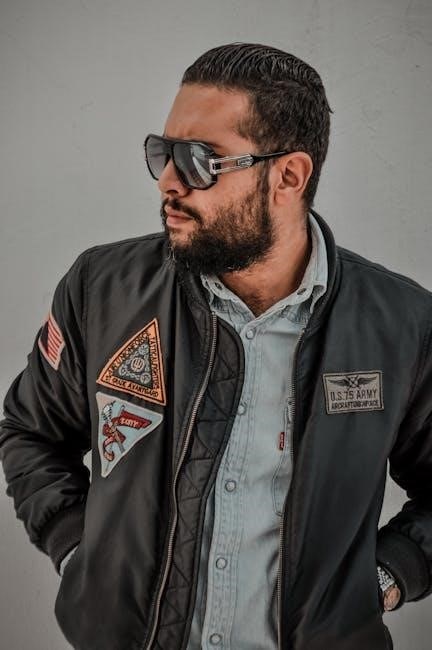
Bomber jacket sizing isn’t universal! US Wings and brands like B760M BOMBER often have unique charts.
Always consult the specific brand’s guide for accurate fit.
US Wings Size Charts
US Wings provides detailed size charts specifically for their flight and bomber jackets, alongside military clothing and Aloha shirts. These charts are crucial for ensuring a proper fit, as sizing can vary significantly between manufacturers.
Typically, US Wings charts include measurements for chest size, shoulder width, sleeve length, and back length. It’s recommended to carefully measure yourself before consulting the chart.

For example, a men’s size Medium at US Wings might correspond to a chest measurement of 23 inches, a shoulder width of 27.5 inches, a sleeve length of 19 inches, and a back length of 25.5 inches. Larger sizes, like XL, will have corresponding increases in these measurements.
Referencing these specific charts will greatly improve your chances of selecting the correct size and enjoying a comfortable, well-fitting jacket.
Specific Brand Size Guides (Example: B760M BOMBER)
Brand-specific sizing is essential, as variations occur even within similar jacket styles. The B760M BOMBER, for instance, requires referencing its unique size guide. This model, built upon a 611 power supply foundation, may have a tailored fit.
While general charts offer a starting point, the B760M BOMBER’s specifications—including features like dual M.2 slots and a specialized heatsink—could influence sizing.
Notably, the B760M BOMBER WIFI version supports WIFI6E and Bluetooth 5.2, potentially impacting the jacket’s overall structure. Always prioritize the manufacturer’s official guide for accurate measurements and a comfortable fit.
Ignoring brand-specific details can lead to incorrect sizing and a disappointing experience.
Where to Find More Detailed Size Information
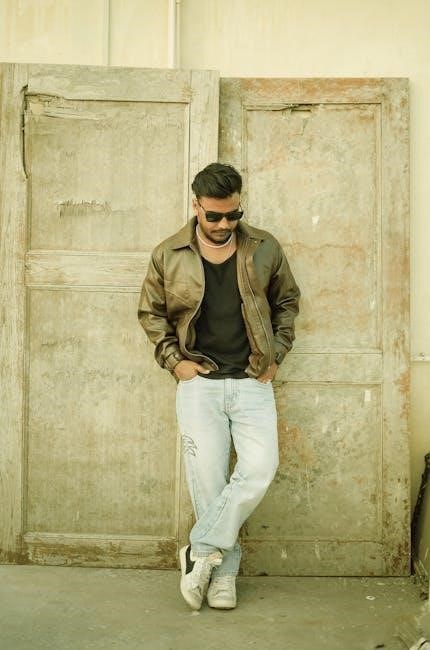
Retailer websites and official manufacturer guides provide comprehensive bomber jacket sizing charts.
These resources offer detailed measurements and conversion tables for accurate fit selection.
Retailer Websites & Size Charts
Most online retailers dedicate sections to sizing information, often including detailed charts specific to bomber jackets. These charts typically list measurements like chest, shoulder, sleeve length, and back length, corresponding to various sizes (XS, S, M, L, XL, etc.).
Pay close attention to how the retailer instructs you to take your measurements – consistency is key! Some may recommend measuring with light clothing, while others suggest wearing the type of layers you’d typically wear under the jacket.
Look for size conversion tools if you’re unsure about translating US sizes to international standards. Many sites offer these features. Don’t hesitate to check the retailer’s return policy before purchasing, just in case the fit isn’t quite right.
US Wings provides size charts for their jackets.
Manufacturer’s Official Size Guides
Directly consulting the jacket manufacturer’s size guide is often the most reliable approach. These guides are tailored to the specific cut and construction of their garments, offering the most accurate fit predictions.
Manufacturers like US Wings provide detailed charts for their flight and bomber jackets, covering various clothing items. Look for downloadable PDFs or interactive size finders on their websites.
For brands like B760M BOMBER, checking their official documentation is crucial, as sizing can vary significantly. These guides often include instructions on how to measure yourself correctly.
Remember that sizing can differ even within a brand’s product line, so always refer to the guide for the specific jacket you’re interested in.
Final Thoughts on Bomber Jacket Sizing
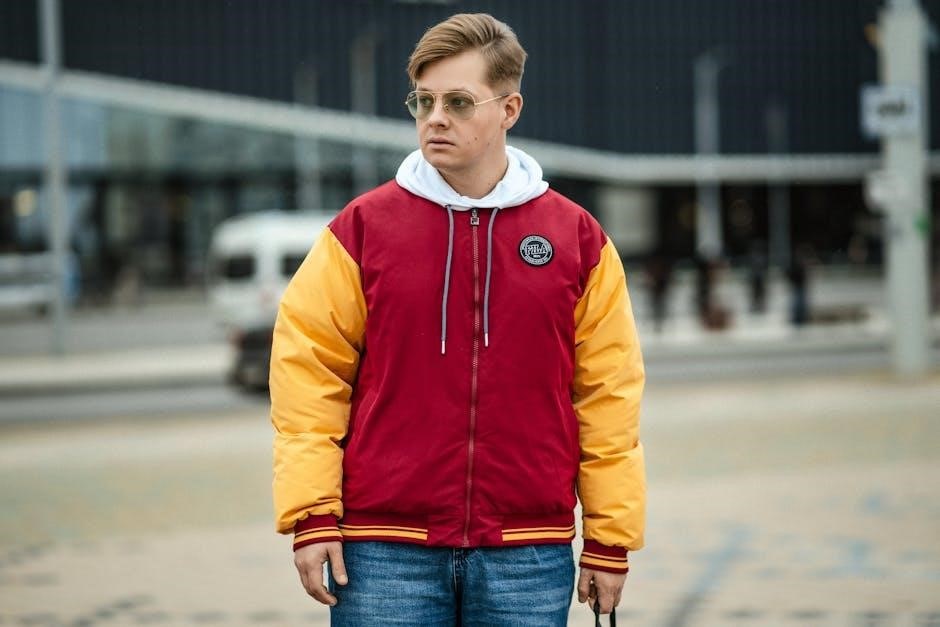
Ultimately, achieving the perfect bomber jacket fit requires careful consideration and a bit of effort. Don’t rely solely on standard size labels; measurements are key!
Account for personal preferences – do you prefer a snug or looser fit? Consider layering options when selecting your size. Comparing measurements to a favorite jacket is a smart strategy.
Remember brand-specific variations exist, so always consult the manufacturer’s guide. Don’t hesitate to check retailer websites for additional sizing information.
Prioritizing accurate measurements and understanding fit nuances will ensure your bomber jacket looks and feels fantastic for years to come.